

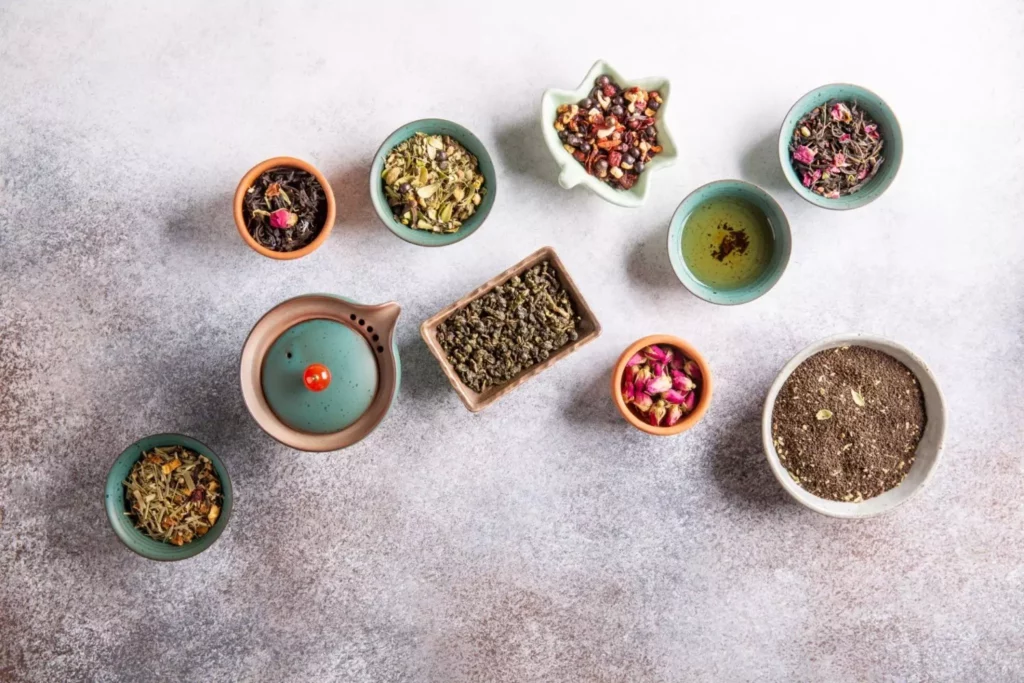
Traditional Chinese Medicine (TCM) has used herbs as part of its traditional healthcare system for centuries. Chinese herbal medicine includes hundreds of commonly used plant-based substances, which practitioners traditionally select and combine according to a person’s individual TCM pattern rather than a single symptom alone.
In this guide, we explore 10 well-known Traditional Chinese Medicine herbs, including Ren Shen (ginseng), Huang Qi (astragalus), Suan Zao Ren (jujube seed), and Bai Zhu (atractylodes). You’ll learn about their traditional uses, TCM properties and meridian associations, as well as what modern research suggests where relevant.
This Traditional Chinese Medicine herbs list is not a ranking of the “best” or most effective herbs. Instead, it provides examples from different TCM categories to help you understand how Chinese herbs have traditionally been classified and used. Traditional uses should not be interpreted as proof of clinical effectiveness, and herbal products may not be appropriate for everyone.
What Are TCM Herbs?
TCM herbs are plant-based and other natural substances traditionally used as part of Traditional Chinese Medicine. Rather than selecting an herb solely for a particular symptom, TCM practitioners traditionally consider a person’s broader pattern and may combine multiple herbs into individualized formulas.
In TCM, herbs are classified according to characteristics such as temperature, taste, and meridian affinity. These concepts are part of the traditional Chinese medicine framework and should not be interpreted as direct equivalents of modern anatomical or physiological processes. The next section explains how these traditional properties are used to categorize herbs in TCM.
How Do Chinese Herbs Work? (Properties and Meridians)
Traditional Chinese Medicine classifies herbs according to a traditional framework that includes their nature (temperature), taste, and meridian affinity. Practitioners use these characteristics, together with an individual’s TCM pattern, when selecting herbs and building formulas.
-
Temperature (Nature): Herbs are traditionally classified as Cold, Cool, Neutral, Warm, or Hot. In TCM theory, cooling herbs may be selected for patterns described as Heat, while warming herbs may be used for Cold patterns.
-
The Five Tastes: Herbs may be classified as Sweet, Sour, Bitter, Pungent, or Salty, with each taste traditionally associated with particular actions. For example, Sweet is associated with tonifying and harmonizing, while Bitter is associated with clearing Heat and drying Dampness.
-
Meridian Entry: This describes the organ-meridian systems with which an herb is traditionally associated, such as the Lung, Spleen, or Liver meridians. Meridian theory also appears in other areas of TCM. For example, the traditional Chinese Medicine Body Clock associates different two-hour periods of the day with particular organ systems and meridians.
These classifications are concepts within traditional Chinese medicine and should not be interpreted as direct equivalents of modern anatomy or established physiological mechanisms.
Single Herbs vs. Herbal Formulas
In traditional clinical practice, Chinese herbs are often used as part of multi-herb formulas rather than individually. A practitioner may select and adjust a formula based on the person’s overall TCM pattern, taking into account factors such as symptoms, digestion, sleep, energy levels, and other individual characteristics.
Traditional TCM formulas may be organized according to the roles known as Chief, Deputy, Assistant, and Envoy. The Chief herb addresses the primary pattern, while the other herbs are traditionally selected to support or modify the formula’s overall action.
This means that a herb traditionally associated with a particular concern is not necessarily appropriate for everyone experiencing that symptom. Herbal selection and dosing should be individualized, particularly for people who take medications, are pregnant or breastfeeding, or have existing health conditions.
Traditional Chinese Medicine Herbs at a Glance
The table below provides a quick overview of the 10 herbs covered in this guide. Their properties and actions are described according to traditional TCM classifications and should not be interpreted as established effects in modern medicine.
| TCM Herb | Common/Botanical Name | Nature | Traditional TCM Actions |
|---|---|---|---|
| Ren Shen | Ginseng Root (Panax ginseng) | Slightly Warm | Strongly tonifies Qi; traditionally associated with supporting Spleen and Lung Qi, generating fluids, and calming the Shen |
| Dang Shen | Codonopsis Root (Codonopsis pilosula) | Neutral | Tonifies Qi; traditionally used to strengthen Spleen and Lung Qi and support the generation of body fluids |
| Huang Qi | Astragalus Root (Astragalus membranaceus) | Slightly Warm | Tonifies Qi and raises Yang; traditionally used to strengthen Wei Qi and support Spleen and Lung Qi |
| Bai Shao | White Peony Root (Paeonia lactiflora) | Slightly Cold | Nourishes Blood, preserves Yin, and traditionally helps soften and regulate the Liver |
| Suan Zao Ren | Sour Jujube Seed (Ziziphus jujuba var. spinosa) | Neutral | Nourishes Heart and Liver, calms the Shen, and traditionally helps prevent excessive sweating |
| He Huan Pi | Albizia Bark (Albizia julibrissin) | Neutral | Calms the Shen, relieves constraint, invigorates Blood, and traditionally helps reduce swelling |
| Wu Wei Zi | Schisandra Fruit (Schisandra chinensis) | Warm | Astringes and secures, generates fluids, supports Kidney Essence, and calms the Shen |
| Jin Yin Hua | Japanese Honeysuckle Flower (Lonicera japonica) | Cold | Clears Heat and resolves toxicity; traditionally used to disperse Wind-Heat |
| Bai Zhu | White Atractylodes Rhizome (Atractylodes macrocephala) | Warm | Tonifies Spleen Qi, dries Dampness, and traditionally helps strengthen the Exterior |
| Bai Zhi | Dahurian Angelica Root (Angelica dahurica) | Warm | Disperses Wind, releases the Exterior, alleviates pain, opens the nasal passages, and dries Dampness |
Sources for traditional classifications: Chinese medicine materia medica and pharmacopoeial resources, including the Hong Kong Baptist University Chinese Medicine databases and Chinese Pharmacopoeia–referenced TCM databases.
Read Also: What is Chinese Herbal Medicine?

Top 10 Chinese Herbs
In this carefully curated collection, we present to you 10 of the finest all-natural herbs, staples in Traditional Chinese Medicine, renowned for enhancing health and vitality. Each herb in this selection has a rich history and offers distinct health benefits, some of which have been recognized for centuries and are now being reaffirmed by contemporary research.
These botanical solutions, formulated by experts in Traditional Chinese Medicine, are designed to augment your health and overall well-being in various ways.
Herbs for Energy, Immunity, and Qi (Qi Tonics)
These herbs are foundational for strengthening the body’s energy production, supporting immune resilience, and combating chronic fatigue.
1. Ren Shen (Red Ginseng Root)
Sourced from Panax ginseng, Red Shen undergoes a steaming and drying process, enhancing its potency. This herb is revered for its ability to boost energy, support the immune system, and improve cognitive function. Ren Shen is an effective natural remedy for combating fatigue and enhancing overall vitality. Its adaptogenic nature makes it a valuable addition to herbal treatment programs.
- Properties: Warm, Sweet, Slightly Bitter
- Meridian Entry: Lung, Spleen, Heart
- Primary Action: Strongly tonifies original Qi and restores vitality.
Ginseng has also been studied for its potential role in cognitive health. If you’re interested in this area specifically, explore our guide to herbs for memory and brain health, which looks at ginseng and other botanicals alongside current research.
2. Dang Shen (Codonopsis Root)
This herb is known for its adaptogenic qualities, similar to ginseng, making it a valuable addition to herbal formulations. Dang Shen is also known for its gentle yet effective energy-boosting capabilities. It not only enhances vitality but also supports the digestive system, making it a versatile herb for overall well-being. Its mild nature makes it suitable for extended use without overwhelming the system.
- Properties: Neutral, Sweet
- Meridian Entry: Lung, Spleen
- Primary Action: Tonifies middle Qi and nourishes fluids.
3. Huang Qi (Astragalus Root)
Huang Qi is known for its immune-boosting and adaptogenic properties. Sourced from the Astragalus membranaceus plant, this herb is known for enhancing Qi, the body’s vital energy. Huang Qi is appreciated for its role in promoting overall resilience and supporting immune function. Its sweet and slightly warming nature makes it a versatile herb that complements various formulations.
- Properties: Slightly Warm, Sweet
- Meridian Entry: Lung, Spleen
- Primary Action: Raises Spleen Qi and boosts immune defense (Wei Qi).
Read Also: What is Qi in Chinese Medicine?
Herbs for Calming the Mind & Emotional Balance
When stress, anxiety, or insomnia disrupts your life, these herbs are utilized to nourish the Heart, soothe the Liver, and calm the spirit (Shen).
4. Bai Shao (White Peony Root)
Bai Shao, or White Peony Root, is a valuable herb in Traditional Chinese Medicine recognized for its harmonizing properties. Sourced from the Paeonia lactiflora plant, it is known for nourishing the blood and regulating the menstrual cycle. Bai Shao brings calming effects on the nervous system, aiding in stress reduction. Its ability to soothe muscle tension and address menstrual irregularities makes it a versatile herb for women’s health.
- Properties: Slightly Cold, Bitter, Sour
- Meridian Entry: Liver, Spleen
- Primary Action: Nourishes blood, preserves Yin, and calms Liver wind.
5. Suan Zao Ren (Jujube Seed)
Suan Zao Ren is praised for its calming properties. Derived from the seeds of the Ziziphus jujuba fruit, it is renowned for promoting relaxation and alleviating insomnia. Suan Zao Ren is a gentle yet effective natural remedy for improving sleep quality. Its ability to soothe the mind and nourish the Heart Qi makes it a valuable addition to formulations addressing stress and emotional well-being.
- Properties: Neutral, Sweet, Sour
- Meridian Entry: Heart, Liver, Gallbladder
- Primary Action: Nourishes Heart Yin, calms the Shen (spirit), and improves sleep.
6. He Huan Pi (Mimosa Tree Bark)
Derived from the Albizia julibrissin plant, it is recognized for its sweet and slightly cold nature. He Huan Pi is often utilized to soothe the spirit, alleviate stress, and ease emotional imbalances. He Huan Pi has a gentle yet effective impact on promoting emotional well-being and reducing anxiety. Its ability to harmonize the Heart and Liver energies makes it a valuable addition to formulations aimed at fostering a balanced and serene state of mind.
- Properties: Neutral, Sweet
- Meridian Entry: Heart, Liver
- Primary Action: Calms the spirit, relieves emotional constraint and stress.
Read Also: What does Aromatherapy do to Help You Feel Better?
Herbs for Digestion, Detoxification, and Resilience
These potent botanicals focus on clearing toxins, improving metabolic function, and addressing respiratory and digestive blockages.
7. Wu Wei Zi (Schisandra Berry)
Derived from the Schisandra chinensis plant, it is renowned for supporting the body’s resilience to stress and promoting overall vitality. Wu Wei Zi is known for its harmonizing effects on various bodily systems, including the liver and respiratory system. Its unique blend of five flavors, sour, sweet, bitter, acrid, and salty, offers a well-rounded herbal experience.
- Properties: Warm, Sour, Sweet
- Meridian Entry: Heart, Kidney, Lung
- Primary Action: Astringes leakage of fluids, calms the Shen, and tonifies Kidneys.
8. Jin Yin Hua (Honeysuckle Flower)
Derived from the Lonicera japonica plant, it is known for its ability to clear heat and toxins from the body. Jin Yin Hua has versatile applications, aiding in respiratory issues, skin conditions, and promoting overall well-being. Its sweet and slightly cold nature makes it suitable for various formulations. Regular incorporation of Jin Yin Hua offers a natural and effective approach to supporting immune health and detoxification.
- Properties: Cold, Sweet
- Meridian Entry: Lung, Stomach, Heart
- Primary Action: Clears heat, resolves toxicity, and fights early-stage colds.
9. Bai Zhu (Atractylodes Root)
Sourced from the Atractylodes macrocephala plant, it is known for strengthening the spleen and promoting the transformation of food into energy. Bai Zhu helps by addressing digestive issues, such as bloating and fatigue after meals. Its sweet and slightly bitter taste adds depth to herbal formulations.
- Properties: Warm, Bitter, Sweet
- Meridian Entry: Spleen, Stomach
- Primary Action: Tonifies Spleen Qi, dries dampness, and aids digestion.
10. Bai Zhi (Fragrant Angelica Root)
Sourced from the Angelica dahurica plant, it is recognized for its acrid and warm properties. Bai Zhi is effective in relieving headaches, sinus congestion, and promoting nasal health. Its aromatic nature adds a pleasant dimension to herbal formulations.
- Properties: Warm, Pungent
- Meridian Entry: Lung, Stomach, Spleen
- Primary Action: Expels wind-cold, relieves pain (especially sinus and headaches).
Why the Same Symptom May Require Different Herbs
In Traditional Chinese Medicine, herbs are selected based on a person’s overall pattern rather than a single symptom. Two people with the same complaint—such as fatigue, insomnia, or bloating—may have completely different underlying TCM patterns. Because of this, they may benefit from different herbs or herbal formulas, even though their symptoms appear similar. The examples below illustrate how the same symptom can be associated with different patterns and treatment approaches.
| Symptom | Possible TCM Pattern | Common Signs | Treatment Strategy |
|---|---|---|---|
| Fatigue | Spleen Qi Deficiency | Poor appetite, loose stools | Tonify Spleen Qi |
| Fatigue | Qi & Blood Deficiency | Dizziness, pale complexion | Tonify Qi and nourish Blood |
| Insomnia | Heart Blood Deficiency | Poor memory, palpitations | Nourish Blood and calm Shen |
| Insomnia | Liver Fire | Irritability, headaches | Clear Liver Fire |
| Bloating | Dampness | Heaviness, thick tongue coating | Transform Dampness |
These examples are simplified for educational purposes. In clinical practice, TCM practitioners evaluate the complete pattern—including symptoms, tongue, pulse, and medical history—before recommending herbs or formulas.
Tips for Using Chinese Herbs
Using traditional Chinese medicine herbs effectively involves some key practices and considerations:
- Consult a Professional. You should ask a qualified herbalist for a consultation. Their expertise ensures proper selection, dosage, and compatibility with your individual health needs.
- Quality Matters. Purchase herbs from reputable sources to ensure quality and authenticity. Look for certified herbal products to avoid adulteration or contamination.
- Dosage and Timing. Follow recommended dosages and usage instructions provided by your herbalist. Take herbs at prescribed times and intervals for optimal effectiveness.
- Consistency is Important. Herbs used in traditional Chinese medicine often require consistent use over time for noticeable effects. Stick to the prescribed regimen to allow the herbs to work gradually within your body.
- Monitor Effects. Observe and track how your body responds to the herbs. Report any adverse reactions or changes to your practitioner.
- Storage and Preservation. Store herbs in a cool, dry place away from direct sunlight to maintain their potency. Follow specific storage instructions for individual herbs or formulations.
- Combine with Healthy Lifestyle. Incorporate Chinese herbs into a balanced lifestyle, including a nutritious diet, regular exercise, and stress management practices for overall better effect.
- Individualized Approach. Herbal treatments are often made for individual constitutions and conditions. What works for one person may not work the same for another; hence, personalized guidance is essential for optimal results.
Remember, the information here is general; for safe and effective use of Chinese herbs, it’s highly advisable to consult with a qualified practitioner familiar with Traditional Chinese Medicine (TCM) and your specific health needs.

Chinese Herbal Therapy: An Expert Perspective from Marina Doktorman
I hold Chinese traditional herbs in high regard for their impact on holistic health. Chinese herbal medicine, rooted in centuries of empirical knowledge, offers a diverse array of botanical remedies that synergize with our approach to holistic wellness.
At Pulse Acupuncture, our acupuncture clinic, we recognize the potency of Chinese traditional herbs in restoring balance and supporting overall health. These herbs, carefully selected and prescribed based on individual needs and patterns, harness the body’s innate ability to heal and harmonize.
Our practice uses the integration of these time-tested Chinese herbal medicine formulations into personalized treatment plans, complementing other modalities such as acupuncture, tuina massage, and dietary recommendations. This holistic approach aligns with our commitment to addressing the root causes of ailments, promoting wellness, and restoring vitality.
However, it’s important to note that the efficacy of Chinese traditional herbs lies in their proper selection and individualized application. Therefore, we help you to choose the needed herbs and their dosage for a maximum result. Our dedication remains in providing safe, effective, and individualized care to optimize the health and vitality of our clients through the power of Chinese traditional herbs.