
Do you feel exhausted even after a whole night’s sleep? Are you struggling with unexplained weight gain, brain fog, or constantly feeling cold? For many patients, the most frustration comes from hearing their doctor say, “Your lab results are normal,” while they still feel unwell.
The thyroid is a small, butterfly-shaped gland that acts as the body’s metabolic engine. When it slows down, your entire system slows down. While Western medicine typically relies on hormone replacement therapy to manage levels, it often overlooks the root cause—especially when the immune system is involved.
At Pulse Acupuncture, Marina Doktorman, M.S., L.Ac., takes a holistic approach. We don’t just treat the numbers on a chart; we treat you. Whether you visit our clinic in Clifton, NJ, or seek expert acupuncture in Williamsburg, Brooklyn, our goal is to restore your body’s natural rhythm and energy.
Hypothyroidism vs. Hashimoto’s: Understanding the Difference
Before exploring how acupuncture for hypothyroidism works, it is crucial to understand what is happening inside your body. Many people use the terms “hypothyroidism” and “Hashimoto’s” interchangeably, but they are distinct conditions.
- Hypothyroidism is a condition (the result). It simply means your thyroid gland is underactive and not producing enough thyroid hormone to keep your metabolism running smoothly.
- Hashimoto’s Thyroiditis is a disease (the cause). It is an autoimmune disorder where your immune system mistakenly identifies the thyroid gland as a threat and attacks it. Over time, this attack damages the gland, leading to hypothyroidism.
Why does this distinction matter? If you only take medication to replace the missing hormones, you are ignoring the immune system attack that is causing the damage in the first place. This is why acupuncture for Hashimoto’s disease focuses heavily on immune regulation and reducing systemic inflammation.
Furthermore, lifestyle factors play a significant role. High levels of cortisol can suppress thyroid function and trigger autoimmune flares. Integrating acupuncture for stress into your treatment plan can be a powerful way to calm the nervous system and protect your thyroid from further damage.
The TCM Perspective: Why Is Your Thyroid “Sluggish”?
While Western medicine focuses on TSH and T4 levels, Traditional Chinese Medicine (TCM) looks at the body as an interconnected system of energy, or Qi. In our practice, thyroid disorders are rarely just about the neck; they are often a sign that your body’s fundamental resources are depleted or blocked. When using Chinese medicine for hypothyroidism, we typically identify one of three common patterns:
- Kidney Yang Deficiency: In TCM, the Kidneys are the source of your constitutional fire (Yang). When this fire burns low, you experience the classic signs of hypothyroidism: profound fatigue, feeling constantly cold, lower back pain, and low libido. The goal here is to warm and reignite the body’s internal engine.
- Liver Qi Stagnation: The thyroid is extremely sensitive to emotional stress. When stress accumulates, it blocks the smooth flow of energy, leading to irritability, neck tightness, and a sensation of a “lump” in the throat (plum-pit Qi). This is why incorporating acupuncture for anxiety is often a necessary step to unlock the body’s healing potential.
- Spleen Qi Deficiency: The Spleen in TCM is responsible for digestion and transforming food into energy. When it is weak, you may experience bloating, heavy limbs, and brain fog. Addressing gut health with acupuncture-based IBS protocols can significantly improve the absorption of nutrients required for thyroid hormone production.

How Acupuncture Treats Thyroid Dysfunction
Many patients ask: How can needles treat an internal hormonal imbalance? Research suggests that treating hypothyroidism with acupuncture works through several physiological mechanisms that bridge the gap between ancient wisdom and modern science.
First, acupuncture helps regulate the HPA Axis (Hypothalamus-Pituitary-Adrenal). By balancing this feedback loop, we can encourage the body to produce the correct amount of hormones naturally, rather than relying solely on medication.
Second, for patients with Hashimoto’s disease, the primary goal is to reduce inflammation. Acupuncture for hashimotos has been shown to modulate the immune system, helping to calm the autoimmune attack that destroys thyroid tissue. By reducing systemic inflammation, we also help alleviate associated symptoms like joint pain and swelling.
Finally, acupuncture improves local blood circulation to the thyroid gland. By placing needles at specific distal points, we increase blood flow to the neck, delivering fresh oxygen and nutrients to the gland to support its function and repair.
Can Acupuncture Help with Thyroid Nodules?
Thyroid nodules are a common concern for many patients. In Chinese medicine, nodules are often seen as a form of “Phlegm Stagnation.” This does not literally mean mucus, but rather a condensation of fluids and energy that has solidified due to poor circulation over time.
While acupuncture cannot instantly dissolve nodules, treatments focus on improving circulation in the neck area and resolving this stagnation. By restoring the smooth flow of Qi and Blood, we aim to prevent nodules from growing and support the body’s natural ability to break down accumulations. This approach is often used alongside standard medical monitoring.
Common Acupuncture Points for Thyroid Balance
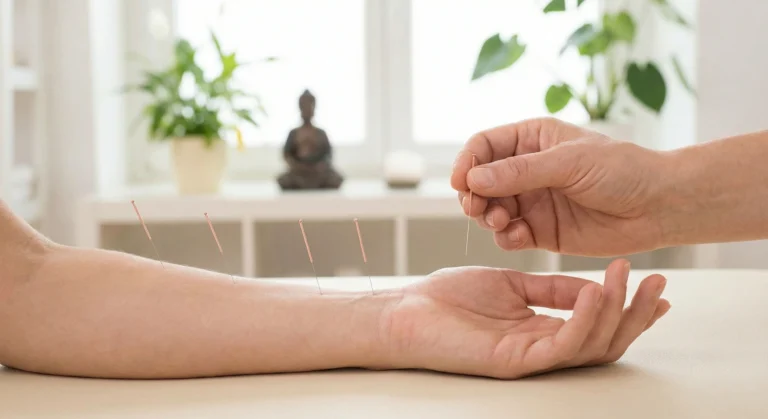
A common fear among new patients is that needles will be placed directly into the thyroid gland. This is rarely the case. Acupuncture for thyroid points primarily utilizes “distal points”—points located on the arms, legs, and ears that have a powerful effect on the endocrine system through the meridian network.
Here are a few key points we may use during your session:
- Hegu (LI4): Located on the hand, this famous point is essential for moving stagnant Qi and regulating the immune system. It is beneficial for the autoimmune aspect of Hashimoto’s.
- Sanyinjiao (SP6): Found on the lower leg, this point is the meeting place of the Spleen, Liver, and Kidney meridians. It is a powerhouse for hormonal balance and reducing stress.
- Zusanli (ST36): Located on the leg, this point is known for boosting overall energy and strengthening digestion, directly addressing the fatigue and metabolism issues associated with hypothyroidism.
- Yintang: Located between the eyebrows, this point calms the mind and Spirit (Shen), helping to reduce the stress that triggers thyroid flare-ups.
Beyond Needles: Herbs and Nutrition for Hashimoto’s
Acupuncture is most effective when combined with proper nutrition and herbal support. As a certified herbalist, Marina Doktorman often prescribes specific Chinese herbal formulas tailored to warm the Yang energy and nourish the blood.
For diet, we generally recommend that patients with hypothyroidism avoid excessive consumption of raw, cold foods (like cold smoothies or salads), as these can further deplete the digestive fire. Instead, focus on warming, cooked foods, and incorporate spices like ginger and cinnamon. Additionally, ensuring adequate intake of selenium-rich foods can support the conversion of thyroid hormones, making Chinese medicine for hypothyroidism a truly comprehensive lifestyle approach.

Conclusion: Restore Your Rhythm at Pulse Acupuncture
Healing from thyroid dysfunction and autoimmune conditions like Hashimoto’s is a journey, not a quick fix. It requires patience, consistency, and a partner who understands the complexities of your body beyond standard lab results. At Pulse Acupuncture, we are dedicated to uncovering the root causes of your fatigue and imbalances and to offering a treatment plan that supports your entire system.
If you have been searching for an acupuncture for thyroid near me and want a provider who combines Traditional Chinese Medicine with a deep understanding of modern health challenges, our team is here to guide you. Marina Doktorman, L.Ac., and her team are proud to provide safe, personalized care to patients at our locations in Clifton, NJ, and Williamsburg, Brooklyn.
Don’t settle for feeling “just okay” or accepting exhaustion as your new normal. Schedule your consultation today and take the first step toward reclaiming your energy and vitality.