
If you suffer from persistent muscle tension, joint discomfort, or seek acupuncture for chronic pain, you have likely encountered effective, natural solutions during your research. You may have discovered two treatments that appear strikingly similar: acupuncture and dry needling. Both modalities involve resting on a comfortable treatment table while a practitioner inserts ultra-thin, sterile needles into the skin.
Because the visual application is nearly identical, a common question arises: What is the difference between dry needling and acupuncture? While both utilize the same instruments, the underlying philosophy, treatment goals, and required practitioner training differ significantly.
In this comprehensive guide, Marina Doktorman, M.S., L.Ac., an experienced and dually licensed acupuncturist (NY & NJ) at Pulse Acupuncture, clarifies these distinctions. Understanding the nuances between dry needling and acupuncture helps you make an informed decision for your musculoskeletal health and overall well-being.
What is the Difference Between Dry Needling and Acupuncture?
To the untrained eye, dry needling and acupuncture appear identical. Both techniques utilize thin, filiform needles to treat pain and dysfunction. However, the fundamental difference lies in their origin and medical philosophy. Acupuncture rests on the ancient principles of Traditional Chinese Medicine (TCM), aiming for systemic balance, while dry needling relies on modern Western anatomy to treat specific musculoskeletal structures.
The following table outlines the primary distinctions:
|
Feature |
Acupuncture |
Dry Needling |
|
Primary Goal |
Holistic healing, systemic balance, and symptom relief |
Releasing muscle knots and relieving localized pain |
|
Philosophy |
Traditional Chinese Medicine (TCM) |
Western anatomy and neurophysiology |
|
Target Areas |
Acupoints along energy meridians |
Myofascial trigger points in skeletal muscle |
|
Practitioner Training |
Master’s Degree (M.S.), thousands of clinical hours |
Short continuing education courses |
What is Acupuncture?
Acupuncture constitutes a core pillar of Traditional Chinese Medicine, a medical system practiced for millennia. Unlike treatments that focus solely on symptomatic relief, acupuncture addresses the root cause of illness by restoring the flow of Qi (vital energy) along specific pathways known as meridians. When Qi circulation becomes stagnant or blocked, pain and dysfunction ensue.
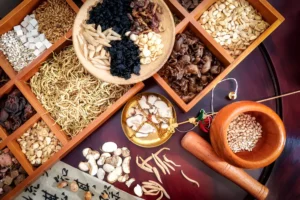
By inserting sterile needles at specific acupoints, a licensed practitioner stimulates the central nervous system. This action triggers the release of endorphins and other neurochemicals, reducing systemic inflammation and promoting the body’s natural healing capabilities. At Pulse Acupuncture, we often complement needling sessions with Chinese herbs to support pain relief, providing a comprehensive approach to resolving complex conditions.
What is Dry Needling?
Dry needling, also known as Western medical acupuncture, is a modern, anatomically based adaptation of needling therapy. This technique strictly targets musculoskeletal pain management, without adhering to TCM concepts such as Qi or meridians.
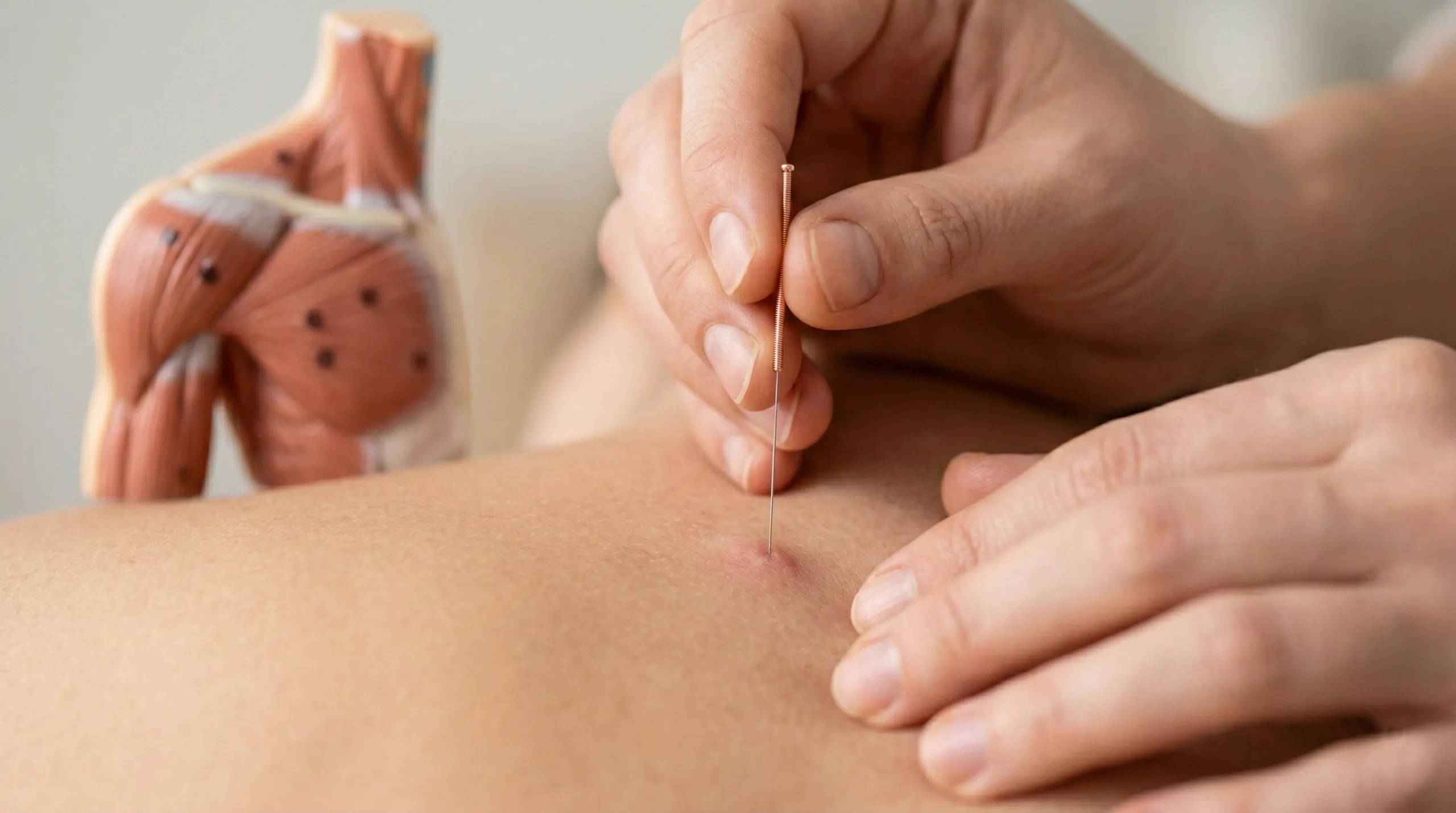
Practitioners of dry needling identify myofascial trigger points—hyperirritable spots or “knots” within skeletal muscle—that cause localized or referred pain. Inserting the needle aims to mechanically disrupt these trigger points, relieve tension, and restore muscle function. While effective for acute muscular issues, this approach does not address systemic imbalances or internal medicine conditions.
The Tools: Dry Needling vs Acupuncture Needles
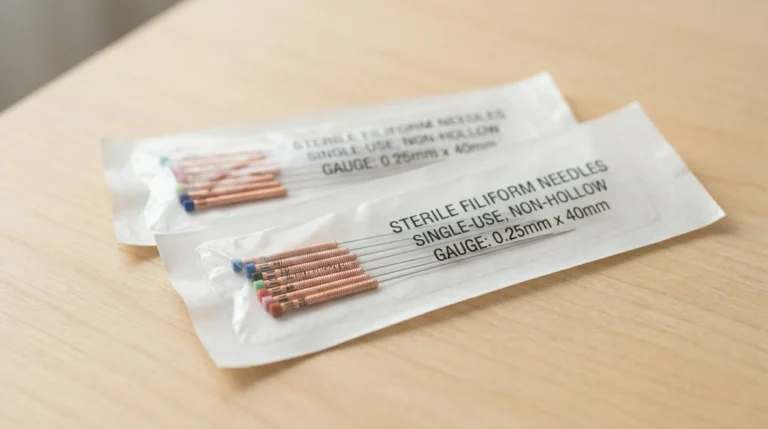
A prevalent misconception about dry needling vs acupuncture needles concerns the instruments themselves. Patients often fear that needles resemble the hollow, hypodermic syringes used for vaccinations or blood draws. This anxiety is unfounded.
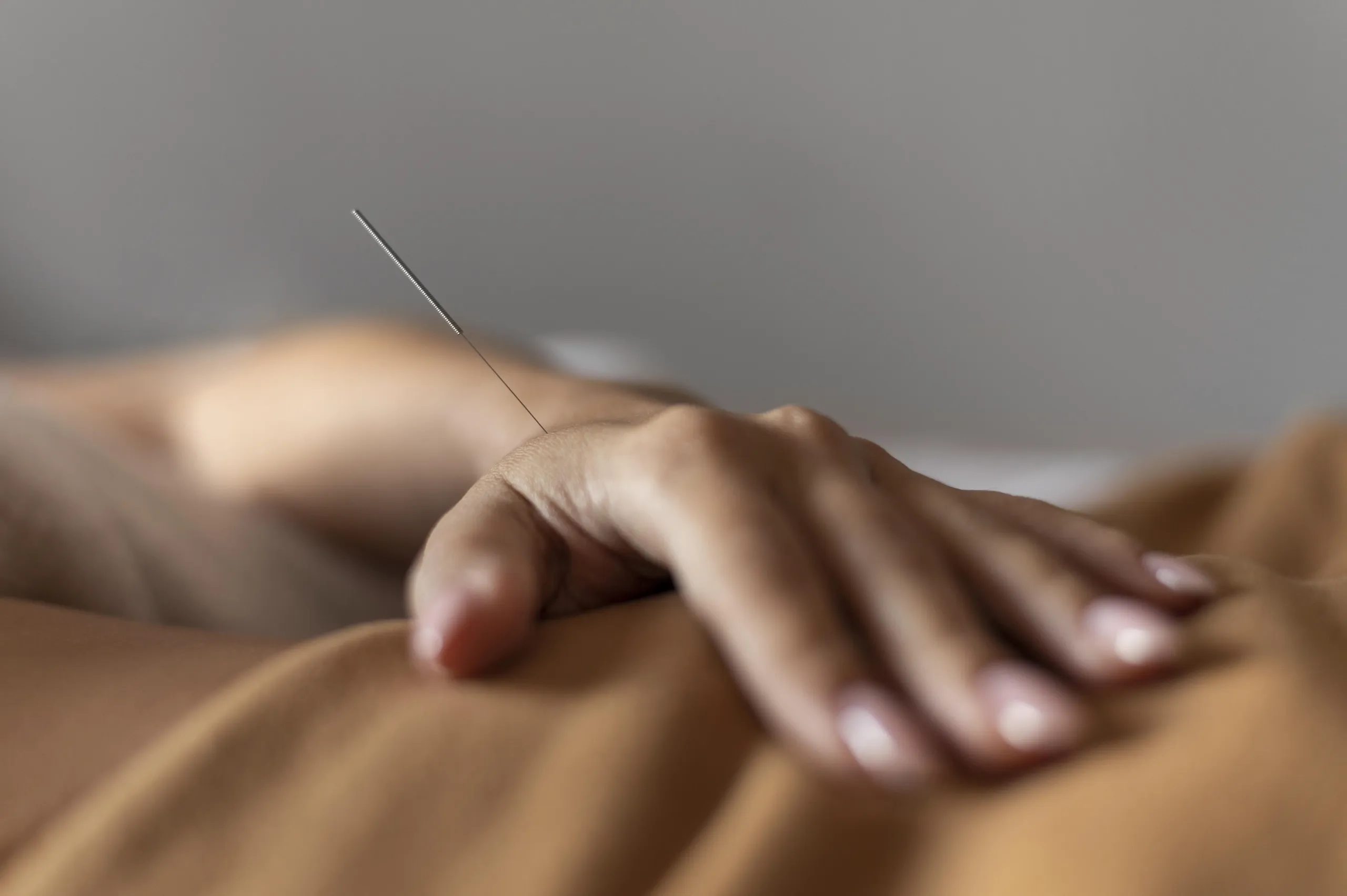
Both disciplines utilize sterile, single-use filiform needles. These instruments are solid, flexible, and ultra-thin—about the diameter of a human hair. Unlike hollow needles designed for fluid transfer, filiform needles part the tissue rather than cutting it, resulting in minimal insertion discomfort. The term “dry” explicitly indicates that the practitioner injects no medication or fluid.
Consequently, the distinction lies not in the hardware but in the application. The depth of insertion, needle manipulation, and therapeutic intent depend entirely on the practitioner’s training and specific treatment goals.
Does Dry Needling Hurt More Than Acupuncture?
Fear of discomfort often dictates a patient’s choice of therapy. When comparing the sensations of dry needling vs. acupuncture, the experience differs profoundly depending on the technique’s intent.
Acupuncture generally provides a restorative, calming experience. Patients typically report a mild, dull ache or heaviness at the insertion site rather than sharp pain. Many individuals find the session so relaxing that they fall asleep. Due to this ability to regulate the nervous system, patients frequently seek acupuncture for anxiety to manage stress alongside their physical symptoms.
Conversely, dry needling can be more intense. Since the goal is to physically disrupt a muscle knot, the practitioner manipulates the needle to elicit a local twitch response. This involuntary spinal cord reflex causes the muscle fibers to contract briefly and then release. While this reaction indicates a successful treatment, it often feels like a deep cramp or momentary shock.
Furthermore, soreness after dry needling is a standard expectation. You may experience muscle fatigue similar to post-workout recovery for 24 to 48 hours, whereas acupuncture rarely results in significant residual soreness.
Case Study: Dry Needling vs Acupuncture for Back Pain
When seeking relief for lumbar discomfort or sciatica, patients often weigh the benefits of dry needling therapy vs acupuncture. Understanding the distinction is crucial for effective treatment.
For acute, highly localized muscle spasms—such as a specific knot in the rhomboid or trapezius—dry needling can offer rapid, targeted release. Mechanical disruption of the trigger point forces the muscle to relax, providing immediate, though sometimes temporary, relief.
However, when considering acupuncture for back pain, the results often favor this traditional approach for chronic or complex conditions. Back pain rarely exists in isolation; it frequently involves systemic inflammation, nerve irritation, and stress. Acupuncture addresses the entire musculoskeletal system, reduces inflammation at the cellular level, and regulates the nervous system.
By treating the root cause rather than just the symptom, acupuncture provides profound, long-lasting relief, whereas dry needling may offer only a short-term fix.
Who is Qualified to Perform Dry Needling vs. Acupuncture?
Determining who is qualified to perform dry needling constitutes the most critical factor for your safety and clinical results. Regulations vary by state, but physical therapists frequently perform dry needling after completing short continuing education courses—often totaling as few as 50 hours of training.
In stark contrast, a Licensed Acupuncturist (L.Ac.) undergoes rigorous, extensive education dedicated exclusively to needling therapies. To become a licensed practitioner, one must earn a Master’s Degree (M.S.) and complete thousands of supervised clinical hours to master both safety and technique.
At Pulse Acupuncture, Marina Doktorman, M.S., L.Ac., brings this high level of expertise to every session. She holds a Diplomate of Acupuncture from the NCCAOM and is fully licensed in NY and NJ. Unlike clinics that treat dry needling as a separate, limited add-on, Marina integrates these trigger-point techniques seamlessly into her comprehensive Sports and Orthopedic Acupuncture protocols.
Whether you require general pain management or specialized sports acupuncture for an injury, selecting a dedicated specialist ensures you receive care from a provider whose entire medical education focuses on the precise, effective use of needles.
Find Lasting Relief at Pulse Acupuncture
Choosing the optimal treatment depends entirely on your specific symptoms, health history, and comfort level. Whether you suffer from a stubborn sports injury, chronic back pain, or stress-induced tension, seeking a comprehensive diagnosis from a highly trained specialist remains the most effective step toward recovery.
At Pulse Acupuncture, we provide expert musculoskeletal pain management by integrating the precision of trigger point release with the holistic benefits of Traditional Chinese Medicine. This dual approach ensures you receive the exact therapy your body requires—whether that involves the targeted release of dry needling techniques or the systemic balancing of acupuncture.
Ready to start your journey to natural relief? Marina Doktorman, M.S., L.Ac., and her team are conveniently located in Clifton, NJ, and Williamsburg, Brooklyn, ready to help you restore balance and vitality.
Frequently Asked Questions: Acupuncture vs. Dry Needling
Is acupuncture the same as dry needling?
No. While both modalities utilize the same sterile, filiform needles, the answer to “Is acupuncture and dry needling the same?” is definitely negative. Acupuncture is a comprehensive medical system rooted in Traditional Chinese Medicine that balances the body’s Qi and nervous system. Dry needling is a specific mechanical technique designed solely to treat musculoskeletal trigger points.
How is dry needling different from acupuncture in terms of scope?
When asking how dry needling is different from acupuncture, consider the treatment goal. Acupuncture addresses the whole person—treating the root cause of pain, reducing systemic inflammation, and managing conditions such as anxiety and digestive issues. Dry needling focuses exclusively on the local anatomy, aiming to physically release tight muscle bands and restore range of motion in a specific area.
What’s the difference in recovery time between acupuncture and dry needling?
What’s the difference between acupuncture and dry needling recovery? Acupuncture is restorative; patients typically leave feeling relaxed with no downtime. Conversely, dry needling often causes “post-needling soreness”—a heavy, aching sensation similar to workout fatigue that can persist for 24 to 48 hours as the muscle tissue heals and resets.