

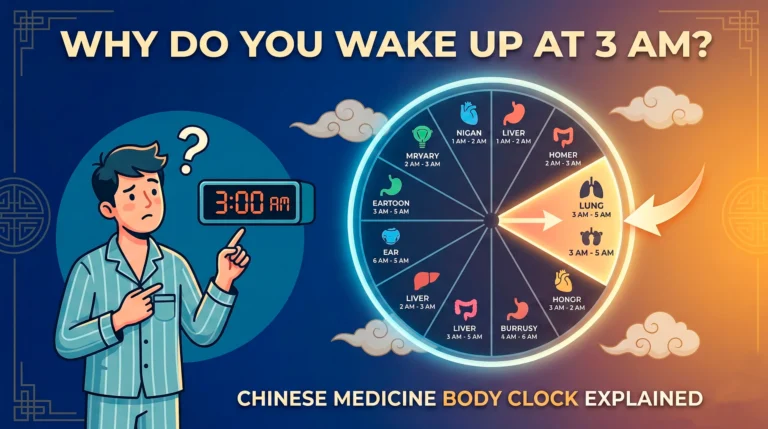
Staring at the ceiling while the rest of the world sleeps is a profoundly isolating experience. If you find yourself repeatedly searching, “Why am I waking up at 3 am?” or wondering why this disruption happens at the same hour, you are not alone. Chronic night waking causes severe daytime fatigue, leaving you desperate for optimal rest. While Western medicine often attributes these patterns to cortisol spikes and manages symptoms with temporary sleep aids, Traditional Chinese Medicine (TCM) offers a more comprehensive diagnostic perspective.
According to the Chinese medicine body clock, the fact that I wake up at 3 am every night yields a fascinating physiological explanation. This consistent waking is not a random glitch; it represents your body communicating a specific internal imbalance. Each organ system regenerates during a designated two-hour window, and frequent waking indicates energetic stagnation within that specific meridian.
Decoding these nocturnal signals requires significant clinical expertise. Marina Doktorman, M.S., L.Ac., utilizes extensive experience in TCM and Chinese Herbology to help patients restore their natural circadian rhythms. At our acupuncture clinic, Pulse Acupuncture, we identify the root causes of sleep disruptions rather than merely suppressing symptoms. Whether you require targeted acupuncture for insomnia or comprehensive healing, understanding your internal clock serves as the crucial first step toward sustained recovery.

What is the Chinese Medicine Body Clock?
Grasping the true meaning of the body clock requires exploring beyond basic sleep cycles. In Western medicine, the circadian clock dictates physiological processes, regulating wakefulness through daily fluctuations in cortisol and melatonin. However, Chinese medicine offers a more profound framework for understanding human health and sleep patterns. The Chinese circadian clock maps the continuous circulation of Qi, or vital energy, as it systematically moves through the body over a 24-hour cycle.
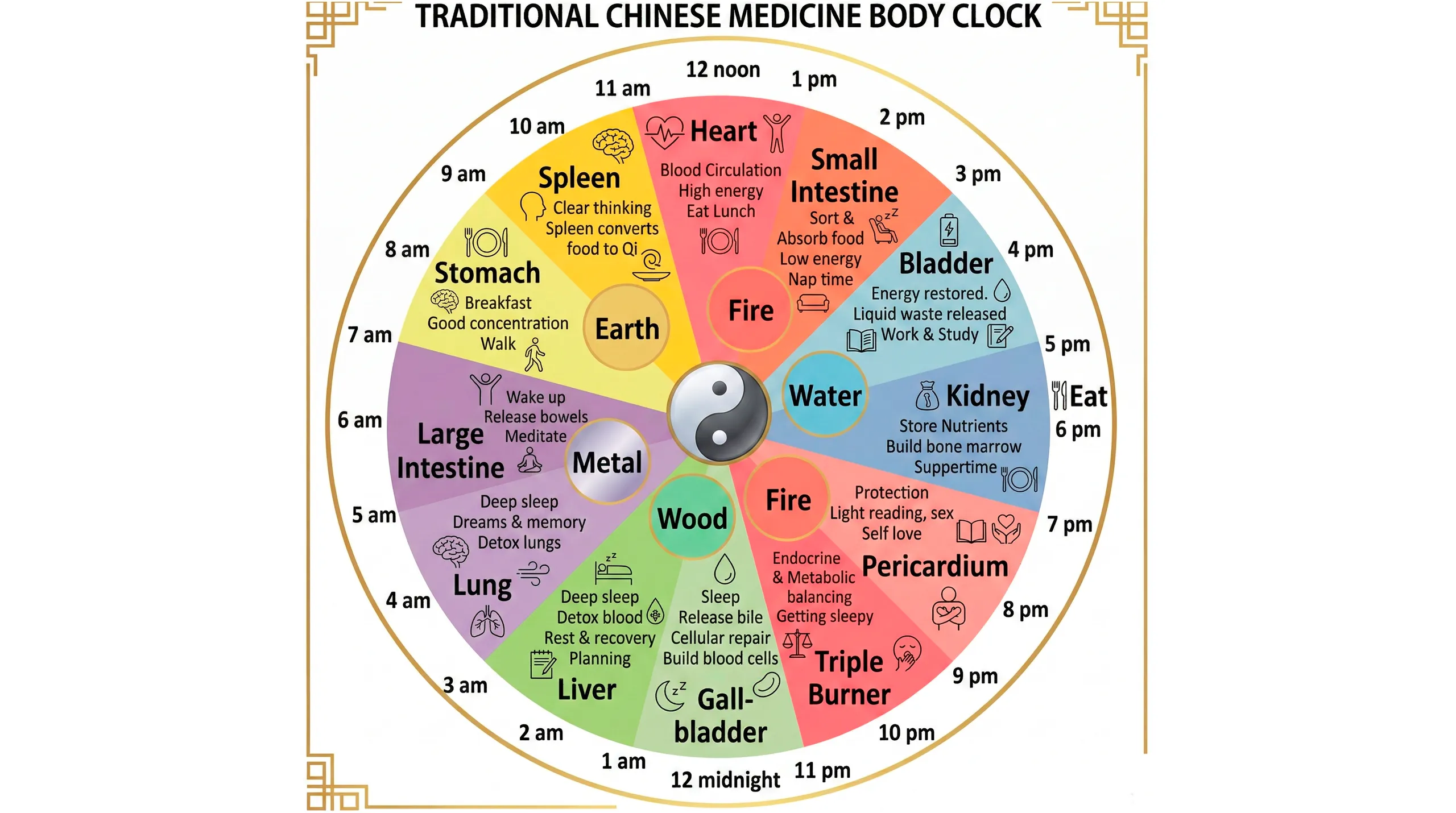
This comprehensive Chinese clock divides the day into twelve distinct two-hour intervals. During each designated window, Qi peaks within a specific primary organ system and its corresponding energy channel, facilitating optimal cellular repair, blood detoxification, and emotional processing. If you experience severe sleep disturbances at a consistent hour, the Chinese medicine body clock indicates significant energetic stagnation or depletion within that actively regenerating meridian.
The 24-Hour TCM Organ Clock Overview
To identify the physiological source of your nighttime waking, you must understand the specific Chinese clock organs and their restorative windows. The TCM body clock provides a precise diagnostic map that practitioners use to pinpoint internal dysfunctions. When Qi flows smoothly through the Chinese medicine organ clock, you experience beneficial rest and robust health. Conversely, waking consistently during a specific timeframe signals a distinct obstruction.
|
Time Window |
Organ Meridian |
Primary Function & Association |
|
11:00 PM – 1:00 AM |
Gallbladder |
Cellular repair and cholesterol processing |
|
1:00 AM – 3:00 AM |
Liver |
Blood detoxification and emotional regulation |
|
3:00 AM – 5:00 AM |
Lungs |
Respiration, immunity, and oxygen distribution |
|
5:00 AM – 7:00 AM |
Large Intestine |
Waste elimination and morning awakening |
|
7:00 AM – 9:00 AM |
Stomach |
Digestion and nutrient assimilation |
|
9:00 AM – 11:00 AM |
Spleen |
Energy extraction and cognitive focus |
|
11:00 AM – 1:00 PM |
Heart |
Blood circulation and systemic vitality |
|
1:00 PM – 3:00 PM |
Small Intestine |
Nutrient sorting and energy distribution |
|
3:00 PM – 5:00 PM |
Bladder |
Metabolic clearing and fluid regulation |
|
5:00 PM – 7:00 PM |
Kidneys |
Energy storage and systemic restoration |
|
7:00 PM – 9:00 PM |
Pericardium |
Heart protection and emotional processing |
|
9:00 PM – 11:00 PM |
San Jiao (Triple Burner) |
Endocrine regulation and temperature control |
This structural TCM organ clock serves as an invaluable tool in clinical practice. By consulting the Chinese organ clock, an acupuncturist identifies underlying energetic imbalances, allowing them to formulate highly targeted treatments. Rather than managing with generic sedatives, addressing these precise meridian windows yields profound improvements in sleep continuity.
Why Do I Always Wake Up at 3 AM? The Liver Meridian Explained
If you frequently ask yourself, ” Why do I always wake up at 3 am, Chinese medicine offers a precise physiological explanation. Between 1:00 AM and 3:00 AM, the body enters liver meridian time. During this crucial two-hour window, optimal health requires profound rest so the liver can effectively filter toxins, regenerate blood, and ensure the uninterrupted circulation of Qi throughout your system.
When patients inquire, why do I wake up at 3 am, clinical evaluation often reveals significant energetic blockages. If your nervous system rouses you at 3 am liver hours, it indicates that your Liver is struggling to complete its essential restorative work. Instead of remaining dormant while the organ processes metabolic waste, your body experiences severe energetic turbulence, leaving you awake and exhausted the next morning.
Waking Up at 3 AM: Anxiety, Stress, and Liver Qi Stagnation
In TCM, the Liver regulates emotional equilibrium alongside physical detoxification. Consequently, waking up at 3 am, anxiety stems directly from unprocessed psychological burdens. When you experience chronic frustration, unexpressed anger, or daily emotional turbulence, the energy within the Liver channel constricts. This specific energetic constriction, diagnosed clinically as liver qi stagnation insomnia, transforms psychological tension into a profound physiological sleep disruption.
Waking up at 3 am is a stress signal that your body remains hyperactive during its designated rest phase, rather than relying on generic sleep aids that temporarily suppress symptoms. Seeking targeted meridian therapies provides significant relief. By inserting fine needles at specific points along the Liver channel, an acupuncturist releases trapped emotional energy and restores smooth Qi circulation.
Addressing these emotional roots requires comprehensive intervention. If nighttime overthinking prevents optimal rest, incorporating targeted acupuncture for stress and specialized acupuncture for anxiety serves as a highly beneficial strategy to eliminate meridian blockages and achieve sustained, uninterrupted sleep.
Why Do I Keep Waking Up at 4 AM? The Lung Meridian Explained
If you constantly wonder, ” Why do I keep waking up at 4 am, the underlying cause shifts from the Liver to the respiratory system. Between 3:00 AM and 5:00 AM, the body transitions into lung time in Chinese medicine. During this critical window, the Lungs execute significant regenerative functions to prepare your physiology for the approaching day.
The Lungs govern respiration, fortify systemic immunity, and distribute oxygen and vital energy throughout the body. Experiencing waking up at 4 am indicates a distinct energetic obstruction within this meridian. Patients who repeatedly ask,” Why do I wake up at 4 am, often exhibit compromised lung capacity, seasonal allergies, or underlying energy deficiencies that disrupt optimal sleep architecture.
Waking Up at 4 AM: Grief and Letting Go
In Chinese medicine, organs are associated with specific emotional states. The Lung meridian directly processes sadness, melancholia, and unresolved loss. Experiencing waking up at 4 am, grief reveals a profound emotional burden tethered to your respiratory function. When you suppress sorrow or struggle to release past trauma, the vital energy within the Lung channel stagnates.
According to the Chinese sleep clock, this energetic stagnation forces your nervous system to wake up precisely when the Lungs attempt their restorative work. Patients frequently report a severe sense of chest heaviness or morning sorrow alongside this sleep disruption. Rather than relying solely on pharmaceutical sedatives, processing this trapped emotion requires targeted, holistic strategies.
Engaging in structured breathing exercises helps move stagnant Qi and release psychological burdens. Furthermore, an acupuncturist can restore proper meridian flow by applying needles at specific respiratory points, providing highly beneficial relief for both emotional sorrow and chronic night waking.
Why Do I Wake Up at 2 AM and Can’t Go Back to Sleep? Immediate Relief
When you constantly ask, ” Why do I wake up at 2 am and can’t go back to sleep, the resulting frustration often exacerbates the insomnia itself. Tossing and turning generates severe physical tension, further preventing your return to optimal rest. Instead of lying awake in distress or relying solely on pharmaceutical sedatives, you can employ targeted physiological strategies to reset your nervous system and break this exhausting cycle effectively.
To facilitate immediate sleep resumption, utilize these highly beneficial first-aid techniques right from your bed:
- Eliminate screen exposure: Reaching for your smartphone exposes your retinas to artificial blue light, which immediately halts melatonin production and severely disrupts your circadian clock. This technological stimulation signals your brain to awaken, reinforcing your sleep disruption.
- Utilize acupressure at specific points: You can stimulate immediate relaxation by applying steady, circular pressure at Anmian (located just behind the earlobe at the skull base) or at Pericardium 6 (located on the inner wrist). Gently massaging these precise locations calms an overactive nervous system and sedates mental restlessness.
- Execute TCM-aligned breathing: To clear trapped heat from the Liver meridian and promote optimal lung expansion, practice structured diaphragmatic breathing. Inhale slowly through your nose for four seconds, hold the breath for four seconds, and exhale fully through pursed lips for six seconds. This rhythmic oxygenation clears energetic stagnation and commands your body to initiate profound relaxation.
Applying these accessible tools provides significant middle-of-the-night relief, preventing minor wakefulness from escalating into complete sleep deprivation.
How Pulse Acupuncture Treats Insomnia (Acupuncture & Chinese Herbology)
While immediate acupressure and breathing techniques offer beneficial temporary relief, severe and chronic sleep disruptions require significant professional intervention. Understanding your energetic patterns through the TCM clock provides a crucial diagnostic foundation, but addressing the underlying organ dysfunction demands precise clinical expertise. Instead of managing with generic sleep medications, targeting the root physiological cause supports optimal, long-term restoration.
Marina Doktorman, M.S., L.Ac., possesses profound expertise in decoding the Chinese medicine clock and managing complex sleep disorders. She earned her Master’s degree from the prestigious Tri-State College of Acupuncture and holds NCCAOM Diplomate status, reflecting the highest national standards in her field. As a dually licensed practitioner serving patients across New York and New Jersey, she formulates highly targeted treatment protocols tailored to your specific meridian imbalances.
To address these nocturnal dysfunctions, Marina utilizes a comprehensive, dual-modality approach. By inserting ultra-fine needles at specific meridian points, she effectively clears energetic blockages and helps restore smooth Qi circulation. She seamlessly complements this external therapy with Chinese Herbology, prescribing customized botanical formulas to nourish depleted organs internally. This integrated methodology proves exceptionally effective when providing acupuncture for insomnia, promoting sustained, uninterrupted relaxation for your nervous system.
If you’re consistently searching for a top-rated acupuncturist near you to help manage chronic night waking, seek professional care at Pulse Acupuncture. We provide optimal healing environments at our convenient clinic locations in Clifton, NJ, and Williamsburg, Brooklyn. Schedule your comprehensive initial consultation today to recalibrate your internal rhythms and support your restorative sleep.
Frequently Asked Questions (FAQ)
Is waking up at 3 AM a sign of a bad liver?
Experiencing consistent wakefulness at 3 AM according to the Chinese medicine body clock indicates an energetic imbalance, not necessarily a Western medicine liver disease. This symptom signifies severe energetic stagnation within the meridian rather than pathological organ failure. Consulting a qualified TCM practitioner helps identify and resolve this specific Qi disruption.
How long does it take for acupuncture to fix my body clock?
Restoring optimal circadian rhythms depends heavily on the severity and duration of your chronic insomnia. Many patients report significant improvements in sleep continuity after four to six consecutive acupuncture sessions. Resolving profound energetic deficiencies requires a more comprehensive treatment protocol to achieve sustained restorative sleep.
Can Chinese herbs help with liver qi stagnation and insomnia?
Yes, Chinese herbology provides highly beneficial relief for liver qi stagnation insomnia by nourishing the affected organ internally and promoting smooth Qi circulation. Customized botanical formulas eliminate trapped metabolic heat and calm an overactive nervous system. Combining these targeted herbs with clinical acupuncture yields optimal, long-lasting sleep restoration.