

What Is the Vagus Nerve?
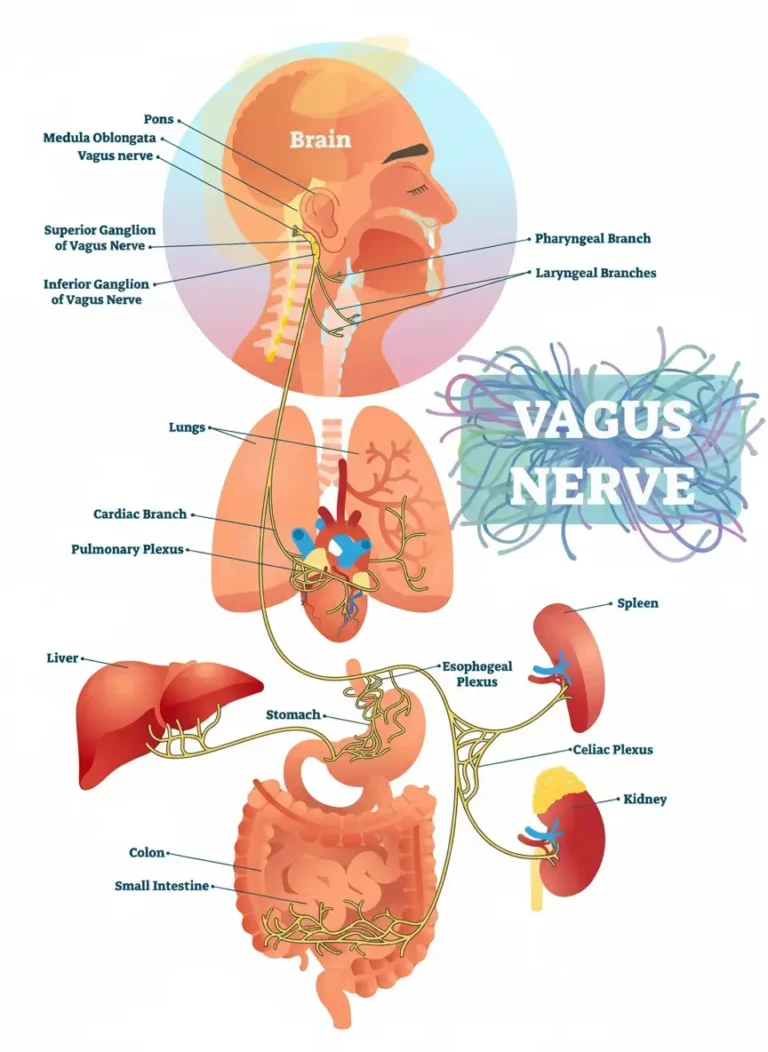
The vagus nerve is a major nerve that runs from your brainstem down through your neck and chest into your belly. It’s often called the “wandering nerve” because it reaches so many organs. It’s also known as the 10th cranial nerve, and it carries messages back and forth between your brain and your body.
Its main job is to help control automatic functions. That includes heart rate, breathing, digestion, and parts of your immune response. It also helps your body shift into a calmer “rest and digest” mode after stress.
The vagus nerve is also partially responsible for certain reflexes, such as swallowing, coughing, gagging, and even nausea. Because it connects to so many systems, it can affect your overall health.

Symptoms of Vagus Nerve Dysregulation
Vagus nerve dysregulation (aka “vagus nerve dysfunction”) means the vagus nerve isn’t sending clear signals between your brain and key organs. Since this nerve helps control things like digestion, heart rate, and stress response, people can feel wrong in a few different ways. Vagus nerve dysfunction symptoms include:
- Digestive issues. Bloating, nausea, constipation, diarrhea, IBS-like Vagus nerve symptoms, or acid reflux.
- Anxiety or panic feelings. Feeling on edge, stressed easily, or having panic-like episodes, which acupuncture for anxiety may help with.
- Low mood. Feeling down or emotionally flat for no apparent reason.
- Heart rate changes. A racing heart, a slow heart rate, or a fluttery “irregular” feeling.
- Ongoing fatigue. Feeling drained even after sufficient rest.
- Harder time recovering from stress. Staying tense for hours, trouble relaxing, or feeling overwhelmed longer than usual. As an extra support, acupuncture for stress is often used.
Conditions Linked to Vagus Nerve Dysfunction
- Gastroparesis. The stomach empties too slowly because vagus nerve signals that drive normal stomach movement aren’t working well.
- Vasovagal syncope. An overreaction of the vagus nerve can suddenly drop heart rate and blood pressure, causing dizziness or fainting.
- Swallowing and voice problems. Since the vagus nerve branches help control the throat and voice box, issues can include difficulty swallowing, hoarseness, or vocal cord weakness.
- Diabetic autonomic neuropathy. Long-term diabetes can damage autonomic nerves (including vagal pathways), affecting digestion, heart rate, and blood pressure.
- Post-surgical nerve-related issues. Surgery near the stomach can sometimes affect the vagus nerve and cause digestive changes, including slow stomach emptying.
How Acupuncture Regulates the Vagus Nerve
Acupuncture can “regulate” the vagus nerve by nudging the nervous system toward a calmer setting. When thin needles stimulate certain spots on the body, nearby sensory nerves send signals up to the brain and brainstem, where a lot of vagus-nerve control happens. That input can shift the balance away from constant “fight-or-flight” and more toward “rest-and-digest.”
One way this shows up is through changes in heart rate variability (HRV). Higher HRV is often caused by more vigorous vagal activity and better stress recovery. People may notice this as easier breathing, a steadier heart rate, and a calmer feeling overall.
Vagus nerve acupuncture may also influence inflammation through nerve-immune pathways. When the vagus system is more active, the body can dial down the release of specific pro-inflammatory signals. On top of that, acupuncture can boost local blood flow and trigger the release of calming brain chemicals, such as endorphins and serotonin, which help with relaxation, sleep, and digestion.
Key Acupuncture Points and Research on Vagus Nerve Activation
The most common Vagus nerve acupuncture points are:
- CV12. The upper abdomen midline is often used for digestion and calming.
- CV17. The center of the chest is often used for stress and breathing comfort.
- HT7. Wrist crease, used for relaxation and anxious feelings.
- ST36. Lower leg, used for digestion support and stress regulation.
- PC6. Inner wrist, used for nausea, stress, and parasympathetic support.
- LU7. Wrist/forearm, often used for calming and balance.
- GV20. The top of the head is used to calm the mind.
- ST9. Front/side of neck, used with extra caution by trained providers.
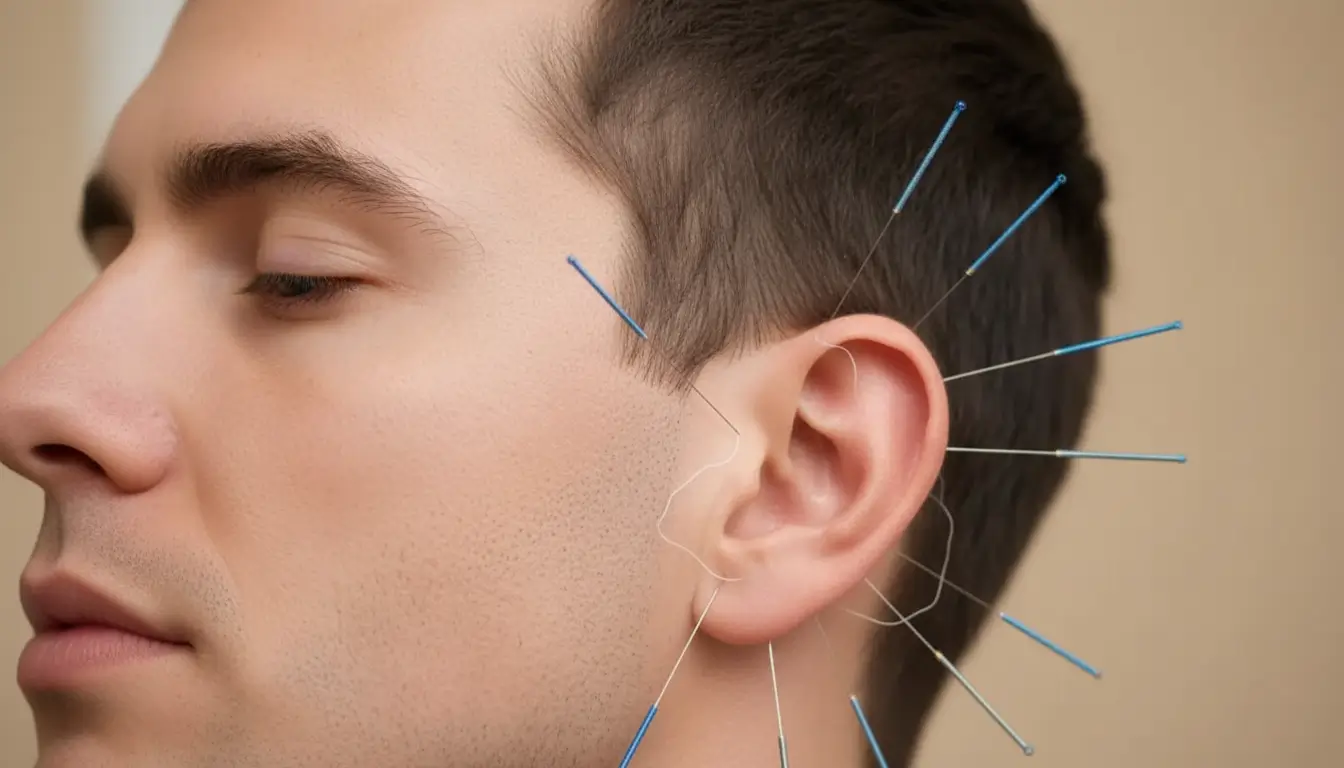
- Ear points. Cymba conchae, tragus, cavum conchae (areas with vagus-nerve branches).
There is extensive research on acupuncture for the vagus nerve; here are just a few examples. This research shows that acupuncture points on the head and neck overlap significantly with the known effects of implanted vagus nerve stimulation devices. The authors argue that this supports the idea that acupuncture in these areas may work by stimulating vagus-related autonomic pathways, being a less invasive option.
Another study found that auricular acupuncture in a vagus-innervated part of the ear led to a drop in heart rate and a boost in a standard HRV measure. In plain terms, that hints at a shift toward “rest-and-digest.”
Benefits of Vagus Nerve Regulation with Acupuncture
One of the biggest vagus nerve stimulation benefits people notice is stress relief. Many sessions leave you feeling more at ease. That calmer state can also support better sleep and make it easier to handle daily stress without feeling constantly tense.
Because the vagus nerve directly communicates with your gut, acupuncture may also help with digestion. People often use it for bloating, sluggish digestion, or IBS-type issues, especially when stress makes symptoms worse. Acupuncture can support heart rate variability (HRV), which is one way researchers measure how well your nervous system adapts and recovers.
And since the vagus nerve helps regulate immune signaling, vagus-focused effects may also help lower inflammation and ease chronic pain over time.
Simple Vagus Nerve Exercises to Use Alongside Acupuncture
- Slow belly breathing. Sit comfortably, breathe in through your nose, and let your belly rise. Exhale a little longer than you inhale. Even 2-3 minutes can help your body settle.
- A simple breathing count. Try inhaling for 4 seconds, pause for 4, then exhale for 6. It’s a quick way to calm down when you feel tense.
- Light yoga or stretching. Gentle moves like child’s pose or cat-cow can relax your neck, ribs, and hips, which often feel tight when you’re stressed.
- Short meditation. One quiet minute focusing on your breath is enough. You’re not trying to “empty your mind,” just give it a little break.
- Gentle neck/throat self-massage. Use light pressure with small circles along the vagus nerve massage points, like the sides of your neck (do not press directly on the front of the throat!).
- Supportive food habits. More whole foods and fewer heavily processed meals can be really good for your gut, which is closely linked to vagus nerve signaling.
When to Consider Acupuncture for Vagus Nerve Support
If your body feels tense, wired, tired, or just not settling down, your vagus nerve may need more support. Acupuncture for the vagus nerve can help calm your nervous system, making a real difference in how you sleep, how your gut feels, and how you handle everyday stress. It’s not an instant miracle, but small changes do build over time.
That’s why some patients look into options like acupuncture for insomnia or acupuncture for IBS when sleep and digestion start feeling wrong.
If you want a team that helps people feel better every day, Pulse Acupuncture has locations in Clifton, NJ, and Williamsburg, Brooklyn. Marina Doktorman, L.Ac., and her team use acupuncture points for Vagus nerve to provide care that’s based on you, without using generic solutions.