

Quick answer: Cupping marks are circular discolorations caused by suction drawing blood toward the skin surface, similar to a mild bruise. They typically fade within 3 to 10 days. In TCM, color is traditionally read as a sign of Blood and Qi circulation, but Western medicine does not support that interpretation. Marks are usually painless, and severe pain or blistering needs attention.
What Causes Cupping Marks?
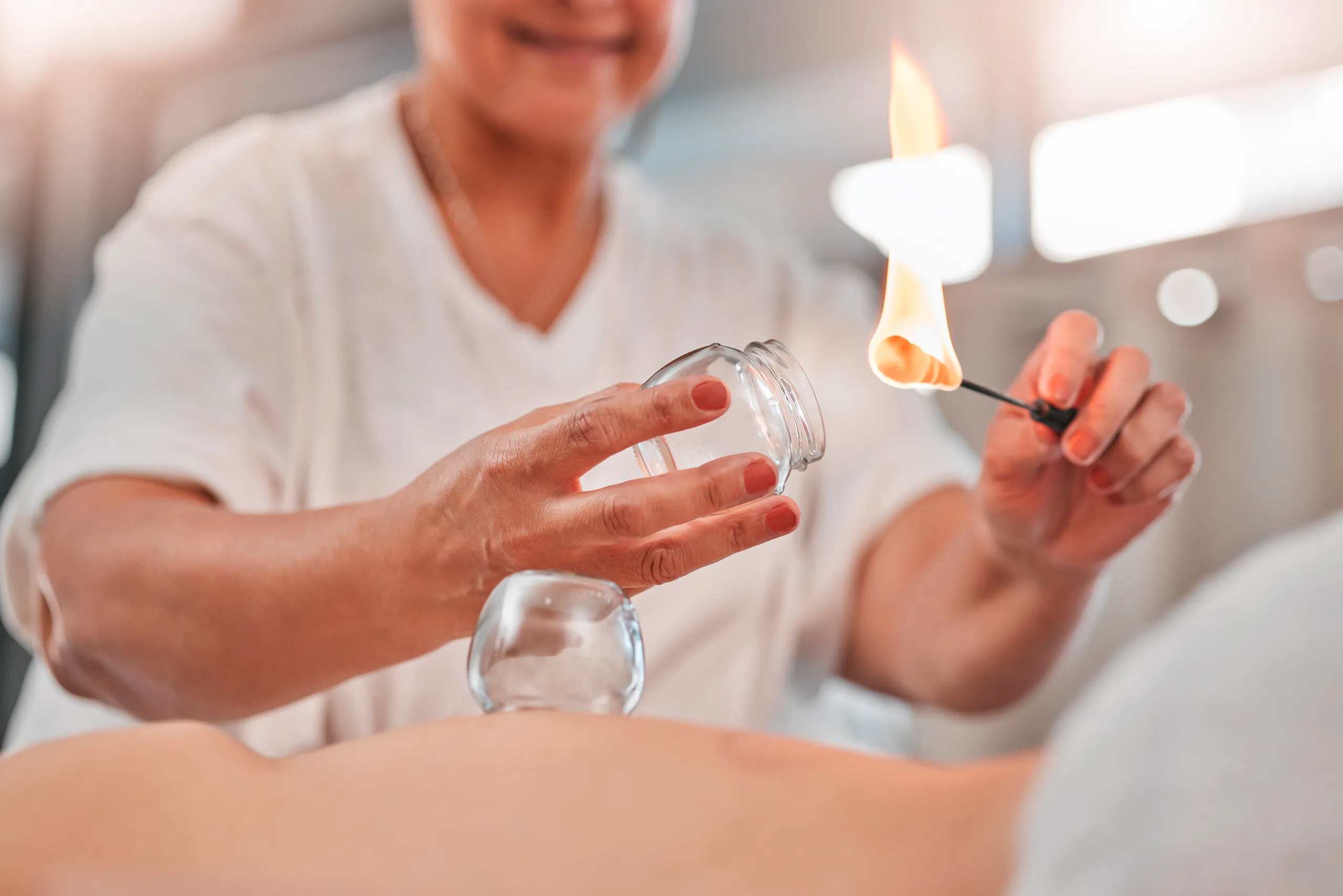
Suction lifts skin and soft tissue, dilating small capillaries beneath the surface. Blood leaks into surrounding tissue, producing round marks. They are not true bruises from impact injury, and the stronger the suction and the longer the cups remain, the darker the marks tend to be. Anyone considering treatment can learn about the technique on our fire cupping page.
What Do Cupping Mark Colors Mean?
TCM practitioners traditionally interpret the shade:
Color | Traditional interpretation |
|---|---|
Light pink or no mark | Little stagnation, or a light treatment |
Bright red | Surface Heat or inflammation |
Dark red or purple | Blood stasis or accumulated tension |
Dark purple or near black | Marked stasis, longer-standing tightness |
Pale with moisture | Dampness or Cold |
Scientific evidence does not confirm that color measures toxins or disease. Mark intensity depends on suction strength, skin sensitivity, hydration, medications and treatment duration. Treat color as a traditional observation, not a diagnosis.
How Long Do Cupping Marks Last?
Light marks: 2 to 4 days
Dark marks: 7 to 10 days
Very dark marks: up to two weeks
Marks fade faster with warmth, gentle movement and hydration. Repeated sessions at the same spot often produce lighter marks as tension decreases.
Does Cupping Hurt?
Most patients report tightness or a pulling sensation rather than pain. Discomfort increases with higher suction and tight muscles. You can request lighter suction, and gliding cupping often causes fewer marks. Read about the effect on muscular pain in our guide to cupping for the back and cupping for athletes.
Is Cupping Safe?
Cupping is generally safe when performed by a trained practitioner using sterile technique. Possible effects include:
Temporary bruising and soreness
Itching as marks fade
Mild lightheadedness
Rarely, blisters or skin infection
Avoid cupping over open wounds, sunburn, varicose veins or fresh scars. Disclose anticoagulant use, bleeding disorders, pregnancy and skin conditions. People often ask about blood clots; cupping is not known to cause venous thrombosis in healthy individuals, but anyone with a clotting history should consult a physician first.
Aftercare Basics
Keep the skin covered and warm for several hours.
Avoid cold showers, intense workouts and alcohol on the treatment day.
Drink water.
Do not pick at blisters.
See our full cupping aftercare guide for details. If you prefer a technique that removes small amounts of blood, learn about wet cupping, and explore other benefits of fire cupping.
When to See a Doctor
Seek medical advice for severe pain, spreading redness, pus, fever, blisters that do not heal or marks that last beyond three weeks.
FAQ
Do darker marks mean better treatment?
No. Mark darkness reflects suction and individual skin response, not treatment quality.
Can I shower after cupping?
Yes, with lukewarm water, after a few hours. Avoid scrubbing.
Why do my marks itch?
Itching commonly occurs as capillaries heal. Avoid scratching.