

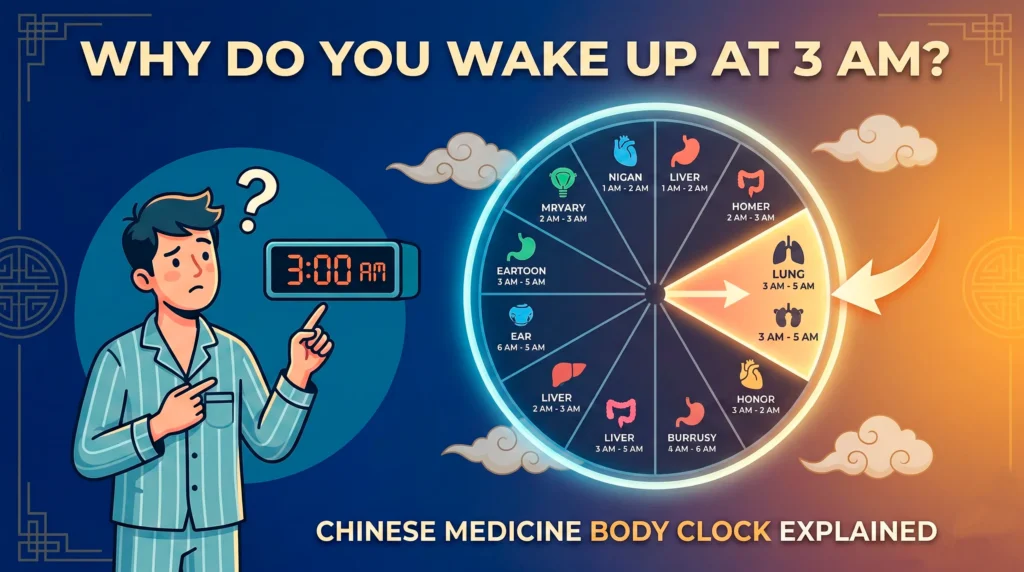
According to Traditional Chinese Medicine (TCM), waking up around 3 AM is connected with the Chinese Medicine Body Clock, which links specific times of the day with different organ meridians. The hours around 3 AM fall between the Liver and Lung meridian periods, which TCM practitioners associate with Qi flow, emotional balance, and internal patterns.
While TCM offers one perspective on nighttime waking, recurring sleep interruptions can also be influenced by factors such as stress, sleep cycles, lifestyle habits, and overall health.
Decoding these nocturnal signals requires significant clinical expertise. Marina Doktorman, M.S., L.Ac., utilizes extensive experience in TCM and Chinese Herbology to help patients restore their natural circadian rhythms. At our acupuncture clinic, Pulse Acupuncture, we identify the root causes of sleep disruptions rather than merely suppressing symptoms. Whether you require targeted acupuncture for insomnia or comprehensive healing, understanding your internal clock serves as the crucial first step toward sustained recovery.

What is the Chinese Medicine Body Clock?
The Chinese Medicine Body Clock is a Traditional Chinese Medicine framework that describes how Qi is believed to move through the body’s meridians during a 24-hour cycle. Traditional Chinese Medicine describes health through interconnected systems involving concepts such as Qi, meridians, and balance (NCCIH). According to TCM theory, each two-hour period is associated with a specific organ system and its corresponding meridian, which practitioners may consider when evaluating patterns related to health, emotions, and sleep.
Unlike the Western concept of circadian rhythms, which are biological cycles that regulate sleep-wake patterns, hormone release, and other physiological processes influenced by factors such as light exposure (NIGMS), the Chinese Medicine Body Clock reflects a traditional TCM perspective on the relationship between organ systems, Qi flow, and symptom patterns throughout the day.
In TCM theory, recurring symptoms or waking at specific times may be interpreted as potential signs of imbalance within a particular meridian system. This concept is based on traditional interpretations of Qi circulation and organ-meridian relationships rather than the biological mechanisms used to explain circadian rhythms in modern medicine.
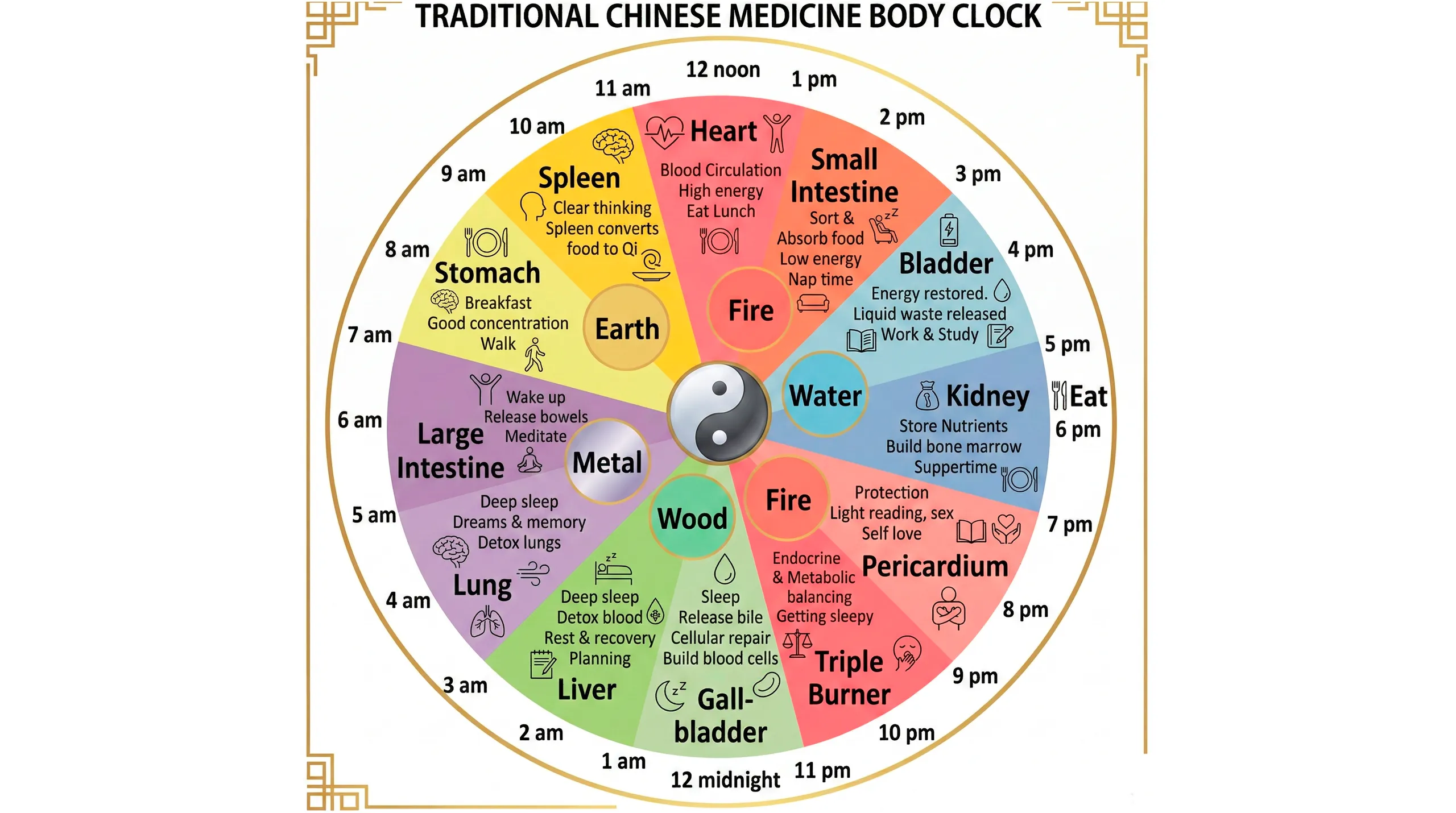
Chinese Medicine Body Clock Chart: The 24-Hour TCM Organ Clock
The Chinese Medicine Body Clock divides a 24-hour period into twelve two-hour intervals, each associated with a specific organ system and meridian in Traditional Chinese Medicine theory. TCM practitioners may consider the timing of symptoms, including recurring nighttime waking, as one factor when evaluating patterns related to Qi flow, organ systems, and overall balance.
|
Time Window |
Organ Meridian |
Primary Function & Association |
|
11:00 PM – 1:00 AM |
Gallbladder |
Decision-making, courage, and Qi movement |
|
1:00 AM – 3:00 AM |
Liver |
Blood storage and emotional balance |
|
3:00 AM – 5:00 AM |
Lungs |
Breathing, Qi movement, and grief-related emotions |
|
5:00 AM – 7:00 AM |
Large Intestine |
Waste elimination and morning awakening |
|
7:00 AM – 9:00 AM |
Stomach |
Digestion and nutrient assimilation |
|
9:00 AM – 11:00 AM |
Spleen |
Digestion, transformation of nutrients, and Qi production |
|
11:00 AM – 1:00 PM |
Heart |
Blood circulation and systemic vitality |
|
1:00 PM – 3:00 PM |
Small Intestine |
Nutrient sorting and energy distribution |
|
3:00 PM – 5:00 PM |
Bladder |
Metabolic clearing and fluid regulation |
|
5:00 PM – 7:00 PM |
Kidneys |
Essence (Jing) storage and foundational energy |
|
7:00 PM – 9:00 PM |
Pericardium |
Heart protection and emotional processing |
|
9:00 PM – 11:00 PM |
San Jiao (Triple Burner) |
Endocrine regulation and temperature control |
The Chinese Medicine Body Clock is considered a traditional framework that some acupuncturists use when evaluating patterns related to sleep and overall balance. By considering the timing of symptoms alongside other factors such as lifestyle, health history, and individual concerns, TCM practitioners may develop a personalized approach to care. These traditional interpretations of organ-meridian relationships are one aspect of a broader assessment process used in acupuncture practice.
Why Do I Wake Up at 3 AM According to Chinese Medicine?
If you frequently ask yourself, “Why do I always wake up at 3 AM?” Chinese Medicine offers a traditional perspective for understanding recurring sleep patterns. In TCM theory, the period between 1:00 AM and 3:00 AM is associated with the Liver meridian, while the following period from 3:00 AM to 5:00 AM is associated with the Lung meridian. Practitioners may consider these timing patterns alongside symptoms, lifestyle factors, and overall health when evaluating individual patterns related to sleep and balance.
From a TCM perspective, waking repeatedly during these hours may be interpreted as a pattern involving Qi flow, emotional stress, or imbalance within the Liver and Lung meridian systems. This does not mean that waking at 3 AM indicates a problem with the physical liver or lungs; rather, it reflects a traditional approach to understanding connections between symptoms, emotions, and the body’s energetic patterns.
Waking Up at 3 AM: Anxiety, Stress, and Liver Qi Stagnation
In Traditional Chinese Medicine, the Liver system is associated with the smooth flow of Qi and emotional balance. TCM practitioners may describe patterns involving stress, frustration, or emotional tension as Liver Qi stagnation, which can be associated with difficulty maintaining restful sleep.
When stress and unresolved emotions affect your daily well-being, they may contribute to nighttime restlessness, overthinking, or difficulty returning to sleep after waking. From a TCM perspective, addressing these underlying patterns may involve supporting healthy Qi flow and restoring balance through personalized approaches.
Acupuncture is one traditional therapy that practitioners may use to support relaxation, stress management, and overall sleep quality. By selecting specific acupuncture points based on an individual’s symptoms and TCM assessment, practitioners aim to address personal patterns rather than applying a one-size-fits-all approach.
Addressing stress-related sleep concerns may include incorporating supportive therapies such as acupuncture for stress and acupuncture for anxiety as part of a broader wellness approach focused on relaxation and healthy sleep habits.
Why Do I Wake Up at 4 AM According to Chinese Medicine? The Lung Meridian Explained
If you frequently wonder, “Why do I keep waking up at 4 AM?” Chinese Medicine offers a traditional perspective for understanding recurring sleep patterns during this time. In TCM theory, the period between 3:00 AM and 5:00 AM is associated with the Lung meridian, following the Liver meridian period from 1:00 AM to 3:00 AM. Practitioners may consider these timing patterns alongside symptoms, lifestyle factors, and overall health when evaluating individual sleep patterns.
From a TCM perspective, waking repeatedly around 4 AM may be interpreted as a possible imbalance related to the Lung meridian and the body’s Qi flow. The Lung system is traditionally associated with respiration, protective Qi, and emotional patterns connected with grief and letting go. These interpretations are part of TCM theory and do not represent a diagnosis of a physical lung condition.
Waking Up at 4 AM: Grief and Letting Go
In Traditional Chinese Medicine, organ systems are traditionally associated with specific emotional patterns. The Lung system is connected with emotions such as grief, sadness, and the process of letting go. From a TCM perspective, unresolved emotional stress or prolonged sadness may be considered factors that influence Qi movement and contribute to disrupted sleep patterns.
Some people who wake during these hours may also experience feelings of heaviness, emotional sensitivity, or difficulty returning to sleep. Addressing these concerns may involve a combination of healthy sleep habits, stress management strategies, and personalized wellness approaches.
Acupuncture is one traditional therapy that practitioners may use to support relaxation, emotional balance, and overall sleep quality. By selecting acupuncture points based on an individual’s symptoms and TCM assessment, practitioners aim to address personal patterns rather than applying a generalized approach.
Why Do I Wake Up at 2 AM and Can’t Go Back to Sleep? Tips for Returning to Sleep
When you wake up during the night and struggle to fall back asleep, frustration and increased mental alertness may make it more difficult to return to sleep. Instead of focusing on the time spent awake, simple strategies can help create a calmer environment and support your body’s natural ability to return to rest.
To support a return to sleep after waking during the night, consider these approaches:
- Reduce screen exposure: Looking at a smartphone or other bright screens during the night may expose you to light that can influence melatonin production and make it harder for your body to return to sleep. Keeping lights low and avoiding stimulating activities may support healthier sleep patterns.
- Try acupressure for relaxation: In Traditional Chinese Medicine, points such as Anmian and Pericardium 6 are traditionally used to support relaxation. Applying gentle pressure to these areas may help promote a calmer state and reduce feelings of restlessness.
- Practice slow, calming breathing: Slow diaphragmatic breathing can help encourage relaxation when you wake during the night. In TCM practice, breathing techniques are traditionally associated with supporting Qi movement, while modern approaches recognize slow breathing as a tool that may help calm the body’s stress response.
These strategies may help reduce frustration after nighttime waking and create better conditions for returning to sleep. If frequent nighttime waking continues, addressing possible contributing factors with a healthcare professional or qualified practitioner may be beneficial.
Chinese Medicine Body Clock vs. Modern Circadian Rhythm: What Does Science Say?
The Chinese Medicine Body Clock and modern circadian rhythms both describe relationships between time and human health, but they come from different frameworks. The Chinese Medicine Body Clock is based on Traditional Chinese Medicine (TCM) theory, including concepts such as Qi, meridians, and organ-system relationships. In contrast, circadian rhythms are biological cycles that regulate sleep-wake patterns, hormone release, metabolism, and other physiological processes throughout a 24-hour period. (NIGMS)
| Chinese Medicine Body Clock | Modern Circadian Rhythm |
|---|---|
| Based on Traditional Chinese Medicine theory | Based on biological research and chronobiology |
| Uses concepts such as Qi, meridians, and organ-system relationships | Uses measurable biological processes and internal body clocks |
| Associates specific time periods with organ systems in TCM practice | Regulates sleep, hormone release, metabolism, and other daily physiological functions |
| Used by TCM practitioners when evaluating symptom patterns | Studied through scientific research on biological rhythms |
Modern research shows that the human body follows daily biological rhythms that influence many physiological processes. These rhythms are affected by environmental signals such as light exposure, as well as factors including sleep schedules, physical activity, and lifestyle habits. Circadian rhythms help coordinate functions such as sleep patterns, hormone regulation, and changes in body temperature.
While modern science does not validate the Chinese Medicine Body Clock as a biological mechanism, both perspectives recognize that timing can play a role in understanding patterns related to sleep and overall well-being. In TCM practice, the timing of symptoms may be considered as one part of a broader assessment, while modern medicine evaluates nighttime waking through factors such as circadian biology, sleep cycles, and other physiological processes.
How Pulse Acupuncture Treats Insomnia (Acupuncture & Chinese Herbology)
While immediate acupressure and breathing techniques offer beneficial temporary relief, severe and chronic sleep disruptions require significant professional intervention. Understanding your energetic patterns through the TCM clock provides a crucial diagnostic foundation, but addressing the underlying organ dysfunction demands precise clinical expertise. Instead of managing with generic sleep medications, targeting the root physiological cause supports optimal, long-term restoration.
Marina Doktorman, M.S., L.Ac., possesses profound expertise in decoding the Chinese medicine clock and managing complex sleep disorders. She earned her Master’s degree from the prestigious Tri-State College of Acupuncture and holds NCCAOM Diplomate status, reflecting the highest national standards in her field. As a dually licensed practitioner serving patients across New York and New Jersey, she formulates highly targeted treatment protocols tailored to your specific meridian imbalances.
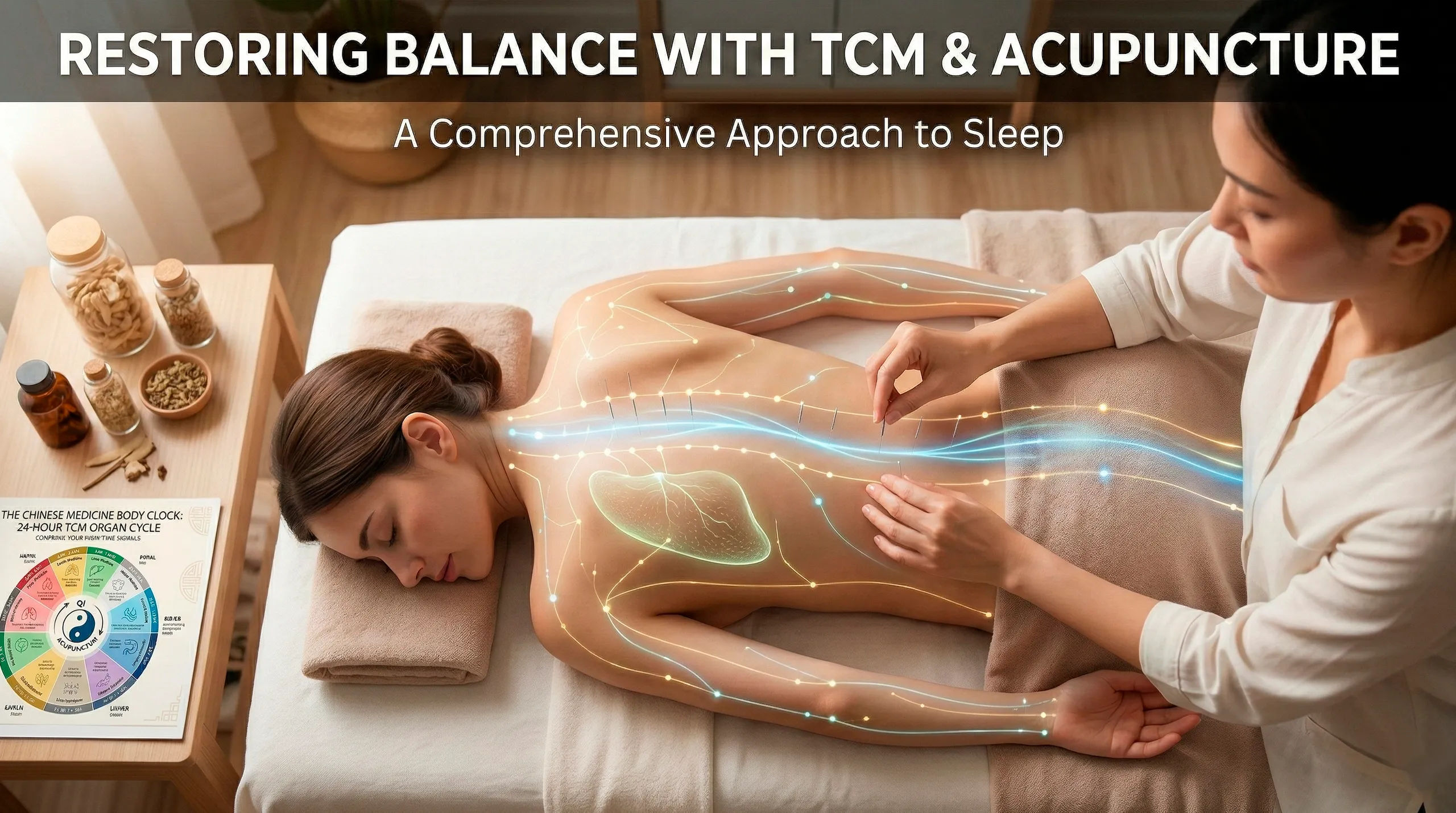
To address these nocturnal dysfunctions, Marina utilizes a comprehensive, dual-modality approach. By inserting ultra-fine needles at specific meridian points, she effectively clears energetic blockages and helps restore smooth Qi circulation. She seamlessly complements this external therapy with Chinese Herbology, prescribing customized botanical formulas to nourish depleted organs internally. This integrated methodology proves exceptionally effective when providing acupuncture for insomnia, promoting sustained, uninterrupted relaxation for your nervous system.
If you’re consistently searching for a top-rated acupuncturist near you to help manage chronic night waking, seek professional care at Pulse Acupuncture. We provide optimal healing environments at our convenient clinic locations in Clifton, NJ, and Williamsburg, Brooklyn. Schedule your comprehensive initial consultation today to recalibrate your internal rhythms and support your restorative sleep.
Frequently Asked Questions (FAQ)
Is waking up at 3 AM a sign of a bad liver?
Experiencing consistent wakefulness at 3 AM according to the Chinese medicine body clock indicates an energetic imbalance, not necessarily a Western medicine liver disease. This symptom signifies severe energetic stagnation within the meridian rather than pathological organ failure. Consulting a qualified TCM practitioner helps identify and resolve this specific Qi disruption.
How long does it take for acupuncture to fix my body clock?
Restoring optimal circadian rhythms depends heavily on the severity and duration of your chronic insomnia. Many patients report significant improvements in sleep continuity after four to six consecutive acupuncture sessions. Resolving profound energetic deficiencies requires a more comprehensive treatment protocol to achieve sustained restorative sleep.
Can Chinese herbs help with liver qi stagnation and insomnia?
Yes, Chinese herbology provides highly beneficial relief for liver qi stagnation insomnia by nourishing the affected organ internally and promoting smooth Qi circulation. Customized botanical formulas eliminate trapped metabolic heat and calm an overactive nervous system. Combining these targeted herbs with clinical acupuncture yields optimal, long-lasting sleep restoration.